
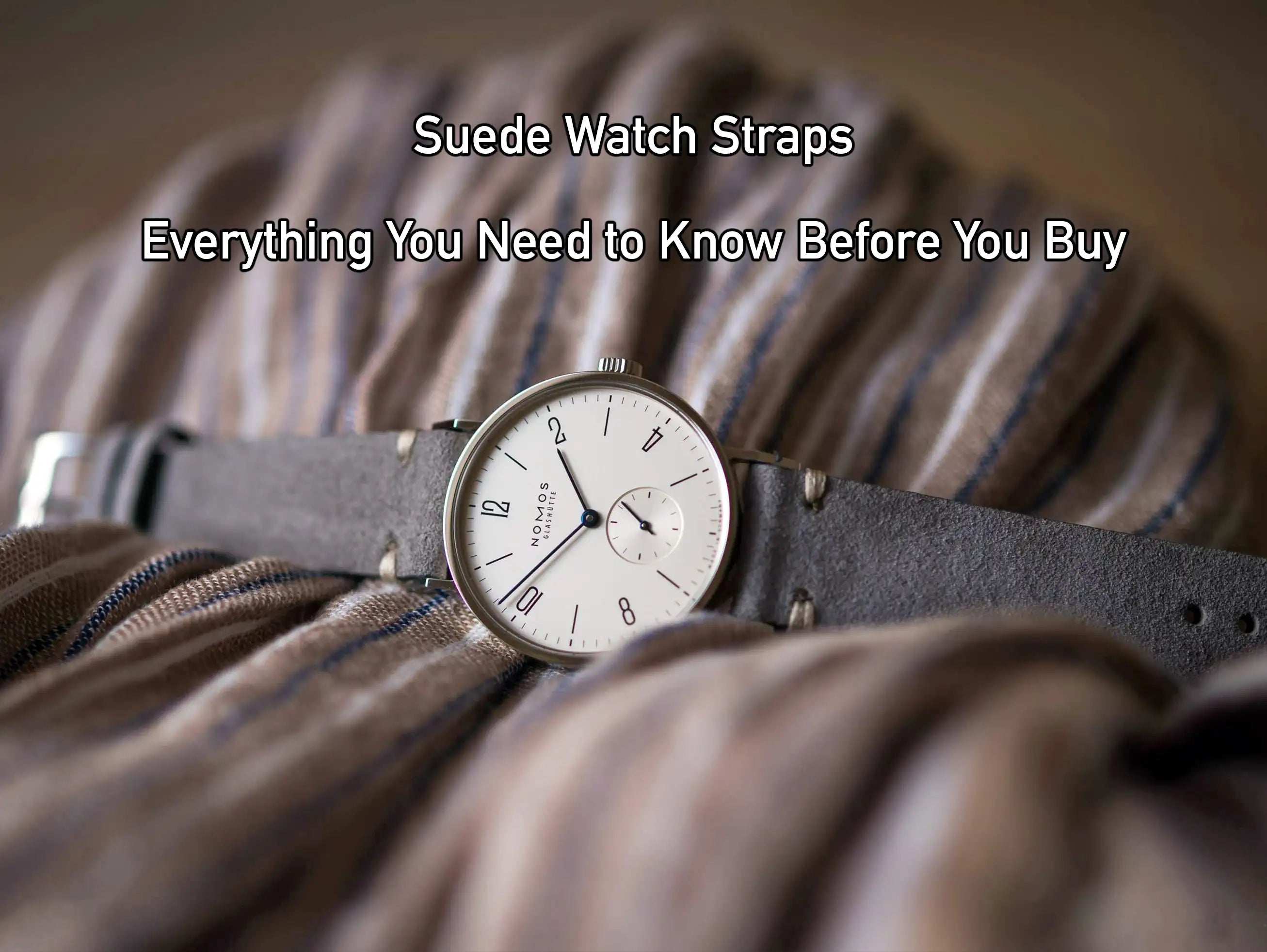
Suede Watch Straps: Everything You Need to Know Before You Buy
If you have ever searched for the most elegant watch strap material, suede leather probably came up quickly, and for good reason. That soft, velvety texture is genuinely beautiful on the wrist, and the matte, refined finish pairs effortlessly with dress watches, vintage pieces, and anything in between. At Watchbandit, suede straps are among our most popular sellers. They are also the category we receive the most questions, and occasional complaints, about.
This guide exists because of those conversations. Not to discourage anyone from buying a suede strap, but to make sure that when you do, you know exactly what you are buying and how to look after it. Because suede leather and plain smooth leather are not the same material, and treating them as if they are is the fastest way to ruin an otherwise beautiful strap.
What Is Suede Leather?
Suede is made from the underside of animal hide, typically lamb, goat, calf, or deer. Unlike full-grain or top-grain leather, which uses the outer surface of the hide and develops a natural protective layer over time, suede uses the inner split layer. That inner surface is buffed to create its characteristic soft, napped texture.

The result is a material that is genuinely beautiful and exceptionally comfortable against the skin. It is also, by its nature, more porous and less water-resistant than standard smooth leather. That porosity is precisely what gives suede its soft texture, and precisely what makes it vulnerable to moisture, humidity, and sweat.
The Honest Lifespan of a Suede Watch Strap
A suede strap worn carefully: in cool, dry conditions, taken off before any water exposure, and rotated regularly with other straps can last for several years. We have customers who have worn the same suede strap for three or four years and kept it in excellent condition.
However, a suede strap worn daily through a full European summer or in tropical countries, through workouts, sweaty commutes, and the occasional splash, is a different story. Under those conditions, one to two years is a realistic lifespan, sometimes less. The material simply was not designed for constant moisture exposure, and once the fibers begin to break down from the inside, no amount of care will reverse it.
This is not a defect. It is the nature of the material. Suede is a seasonal, occasion-specific strap choice, and understanding that before you buy one saves a great deal of frustration later.
What Damages a Suede Strap — And How Fast
- Sweat is the primary enemy. The salt and acids in perspiration work into the open fibres of the suede and degrade the leather from within. You may not notice any visible change for weeks or months, but the structural integrity is weakening with every hot day. The area around the buckle holes, where the strap flexes and contacts the skin most, is usually the first to show wear.
- Water and humidity accelerate the process dramatically. Suede absorbs water quickly, and repeated wet-dry cycles cause the fibers to stiffen, crack, and eventually separate. A strap that gets thoroughly wet once and dries naturally may survive. A strap that gets wet repeatedly will not.
- Direct rain or immersion should be avoided entirely. We occasionally hear from customers who wore their suede-strapped watch during water sports, beach activities, or even caught in a heavy downpour without thinking about it. The results are predictable: the strap softens, stretches, and loses its structural integrity. In the worst cases, and we have heard from customers who went paddle boarding with a suede strap on, the strap can fail entirely, putting the watch at genuine risk of being lost.
This is worth stating plainly: a wet suede strap can break without warning. If your strap gets thoroughly soaked, switch it out immediately and let it dry completely before assessing the damage.
How to Make Your Suede Strap Last
The single most effective thing you can do is treat suede as a seasonal strap. Wear it during the cooler months, autumn and winter, when perspiration is lower and humidity is more manageable. Switch to rubber, nylon, or smooth leather during summer, humid climates, or any activity involving physical exertion.
Beyond seasonality:
- Rotate regularly: The more you rotate between straps, the less total wear any single strap accumulates. A collection of three or four straps worn in rotation will each outlast a single strap worn exclusively.
- Keep it dry: If the strap gets damp, even from light rain or a sweaty afternoon, remove it, lay it flat, and allow it to dry at room temperature away from direct heat. Never compress or fold a wet suede strap.
- Avoid suede protector sprays near the watch case: Some suede care sprays can help the material resist light moisture, but they should be applied carefully and kept well away from the watch crystal, case, and movement.
- Store it properly: A suede strap stored loosely in a cool, dry drawer will age far better than one left coiled tightly or exposed to sunlight.
When to Replace Your Suede Strap
The clearest sign that a suede strap needs replacing is visible cracking or separation of the leather layers, particularly around the buckle holes or spring bars. Stiffness after repeated moisture exposure is another indicator: a suede strap that no longer flexes naturally has lost most of its structural integrity and should not be trusted to hold a watch securely.
Discoloration and compression of the nap are cosmetic issues and do not necessarily indicate structural failure, but they do suggest the strap has been exposed to significant moisture over time.
If you are unsure, replace it, or send us a picture via email and we help you. A new suede strap costs a fraction of what it would cost to lose or damage the watch it is holding.
Suede vs. Other Strap Materials — A Quick Comparison
Suede leather is the most elegant and tactile option, exceptionally soft against the skin, beautiful with dress and vintage watches, and best suited to cool and dry conditions. It is the choice when appearance is the priority and conditions are controlled.

Smooth / textured leather is more durable than suede under the same conditions, develops a patina over time, and handles occasional light moisture better — but it still should not be worn for sports or water activities.

FKM rubber is the practical opposite of suede: completely waterproof, sweat-resistant, UV-stable, and designed for daily wear and active use. Ideal for summer, sport, and anything involving water.

Sailcloth and nylon sit between leather and rubber in terms of durability and versatility — water-resistant, quick-drying, and comfortable for everyday wear without the maintenance sensitivity of leather.

The Bottom Line
Suede watch straps are among the most beautiful strap materials available: there is a reason they remain perennially popular despite their limitations. But they reward owners who understand what they are: a premium seasonal material that thrives in the right conditions and deteriorates quickly in the wrong ones.
Buy a suede strap for autumn evenings, cool weekends, and occasions where you want the watch to look its very best. Buy a rubber or nylon strap for everything else. Rotate between the two, and both will serve you well for longer than either would alone.
If you have questions about suede strap care, strap compatibility, or which strap is right for your watch and lifestyle, our team is always happy to help.

Leave a comment
This site is protected by hCaptcha and the hCaptcha Privacy Policy and Terms of Service apply.