
Article: The Watch Strap Guide: How to Pick, Fit and Look After the Right One
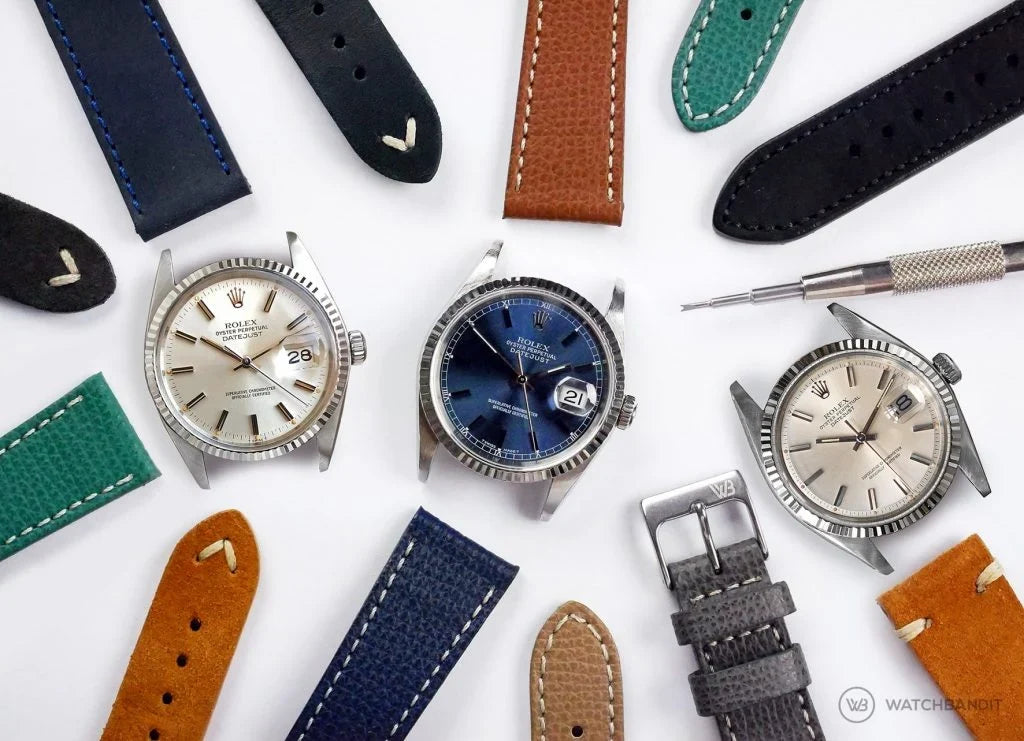
The Watch Strap Guide: How to Pick, Fit and Look After the Right One
You can spend months choosing a watch and thirty seconds choosing the strap. That's backwards. The strap touches your skin all day, takes the sweat, the sun and the desk edges, and decides whether the watch feels like a treat or a chore.
The good news is that choosing a strap isn't complicated. It comes down to a few simple checks. This watch strap guide walks through them in order, so you buy the right one the first time.
Is a Watch Strap the Same Thing as a Watch Band?
Yes. "Strap" and "band" mean the same thing. Strap is the more common word in the UK and for leather, rubber and fabric styles. Band is the usual American term. A bracelet is simply a strap made of metal links.
Shops use all three loosely, so don't let the vocabulary slow you down. What matters is the size, the material and the fit.
How Do You Measure a Watch Strap Size?
Measure the lug width, the gap between the two lugs, in millimetres. The lugs are the little arms that stick out from the watch case. Your strap sits between them, so that gap is your number.
Use a ruler or a pair of digital calipers. Hold it against the inside edge of one lug and read across to the other.
What Is Lug Width, and Which Sizes Are Common?
Lug width is the one measurement you can't fudge. A strap that's even 1 mm too wide won't go on, and one that's too narrow leaves an ugly gap and a wobbly fit.
The most common sizes are 18 mm, 20 mm, 22 mm and 24 mm. Slim dress watches usually sit at the smaller end. Big sports and dive watches tend to go larger. Odd sizes like 19 mm and 21 mm exist, but they're rarer.
Here's the trap. Plenty of buyers guess lug width from the case diameter. A 40 mm case often takes a 20 mm strap, but "often" isn't "always." Measure it. It takes ten seconds and saves a return.
How Long Should a Watch Strap Be?
It should hold the watch steady without pinching. A simple test: you should be able to slide one fingertip under the strap. If the watch spins freely, it's too loose. If it leaves deep marks, it's too tight.
Check the strap's stated length range against your wrist size before you order. Most good sellers list it.
Wrists also change throughout the day. They swell slightly in heat and after exercise. Set the fit in the afternoon, not first thing in the morning, and it'll feel right when it counts.
What Are the Main Types of Watch Straps?
There are four main types: leather, rubber or silicone, nylon, and metal. Each one suits a different kind of day. Pick the one that matches how you actually live, not the one that looks best in a product photo.
Are Leather Watch Straps Worth It?
Yes, if you want a classic look and don't mind a little care. Leather is soft, warm against the skin and works with everything from a suit to a pair of jeans.
Quality varies a lot, though. Vegetable-tanned leather is made with plant-based tannins and develops a rich patina as it ages. Chrome-tanned leather is more common and handles moisture and stains better. Calfskin is the everyday standard, while suede and alligator-grain finishes lean dressier.
The catch is sweat and water. Leather absorbs moisture, so it wears faster than synthetics, especially in hot weather. Treat it as your office-and-dinner strap, not your swimming strap.
Are Rubber and Silicone Straps Good for Everyday Wear?
Yes. They're the most practical choice for workouts, travel and wet weather. They don't soak up water, they rinse clean in seconds and they stay comfortable when you sweat.
Not all rubber is equal, though. Fluoroelastomer (FKM) feels softer and holds up better than basic silicone, which can feel stiff and attract lint. When you shop, judge the feel and finish, not just the label.
What Is a NATO Strap?
A NATO strap is a single piece of woven nylon that threads behind the watch and under the spring bars. The name traces back to the UK Ministry of Defence's Defence Standard 66-2, issued in 1973.
It earns its fans for good reasons. If a spring bar ever fails, the watch stays attached to the strap instead of hitting the floor. Nylon also dries fast, costs little and comes in endless colours. If you want to try a new look without a big spend, start here.
Should You Choose a Metal Bracelet?
Choose metal if you want durability and a polished look. Stainless steel handles water, sweat and daily knocks, and it looks right in a gym or a boardroom.
The trade-offs are weight and sizing. Resizing usually means removing links, which is easy with the right tool or a quick trip to a jeweller. When you compare options, look closely at the clasp and the end links. Those are the parts where cheap bracelets give up first.
Which Strap Material Fits Your Lifestyle?
Match the strap to your toughest day, not your easiest one. If your week involves sweat, rain or swimming, go for rubber, silicone or steel. If it's mostly desks and dinners, leather is a pleasure. If you love variety, a few NATO straps go a long way.
Here's a quick cheat sheet:
- Office and formal events: leather in black, brown or tan
- Gym, running and beach days: rubber or silicone
- Weekends and travel: nylon or NATO
- One strap for everything: stainless steel bracelet
One thing buyers often miss: the strap doesn't set your watch's water resistance. The case, crystal and seals do. Water-resistant watches are tested under ISO 22810, and dive watches follow the stricter ISO 6425. So if your watch says "30 m," that's a splash rating, not a licence to dive.
Pair a leather strap with a dive watch and the watch can handle a swim, but the leather can't. Switch straps before you get wet.
How Do You Change a Watch Strap at Home?
With a spring bar tool, it takes about two minutes. You don't need a watchmaker. You need a soft surface, a steady hand and a little patience.
- Lay the watch face-down on a soft cloth to protect the crystal.
- Slide the fork end of the tool between the strap and the lug.
- Press the spring bar's shoulder inward and pull the strap free.
- Seat one end of the new spring bar in its lug hole, then compress the other end and click it in.
- Tug gently on both sides to confirm it's locked.
Spring bars are tiny, usually around 1.5 to 1.8 mm thick, and they love to ping across the room. Work over a table with a tray or cloth underneath. Never work over carpet.
If you swap straps often, look at quick-release straps. A small tab lets you change them with a fingernail, no tool needed.
A few watches have drilled lugs or curved cases that need special straps. If yours looks unusual, check the lug type before you order.
How Do You Make a Watch Strap Last Longer?
Keep it clean, dry and away from harsh conditions. A few minutes of care a week can add months, sometimes years, to a strap's life.
- Leather: wipe with a dry or barely damp cloth and let it air-dry. Keep it away from heaters and direct sun.
- Rubber and silicone: rinse with mild soap and water, then dry before storing.
- Nylon: hand-wash, rinse and air-dry. Skip the hot dryer.
- Metal: wipe often and use a soft brush with soapy water to clear grime between links.
The best habit of all is rotation. Sweat is the number one enemy of almost every strap material, and a day off helps them all recover. Two leather straps worn on alternate days will usually outlast a single strap worn daily.
Store spares flat or loosely coiled, out of sunlight. Strong light fades colour and dries out leather.
Can a Watch Strap Irritate Your Skin?
Yes. The usual culprits are metal, material and trapped moisture. Redness or itching under a watch is common, and it's usually fixable.
Nickel is one of the most common causes of contact dermatitis, according to the American Academy of Dermatology. Buckles, clasps and some bracelet parts can contain it. Look for hypoallergenic options such as titanium, or stainless steel with low nickel release.
Sweat and soap residue can also cause trouble. Clean both the strap and the skin underneath regularly, and don't wear the watch too tight. If the irritation lingers, see a dermatologist instead of guessing.
How Do You Match a Strap to Your Style?
Start with the dial colour, then think about the occasion. A black dial works with black, grey or dark brown. A blue dial looks sharp on tan leather or steel. A green dial pairs nicely with olive nylon or brown leather.
You have two routes. Matching colours look elegant and understated, while contrasting colours look bold and playful. Neither is wrong. Pick the mood you wanrevolt.
A few more pointers:
- Match the strap's thickness to the watch. Slim straps suit slim dress watches, and chunky straps suit sports watches.
- Match your metals. A gold-toned watch looks best with brown leather and a gold-toned buckle.
- Mind the texture. Smooth leather reads formal, and woven nylon reads casual.
Don't overthink it. A strap is the one part of watch style you can change for the price of lunch, so experiment freely.
Final Thoughts: Three Checks for the Right Strap
Strip away the detail and you're left with three checks. Get the lug width right. Choose a material that suits your real day. Set a fit that feels good by the afternoon.
Start by measuring your lug width today. Then browse the leather, rubber and nylon options at WatchBandit and keep one strap for work and one for play. Your wrist will thank you.
Frequently Asked Questions
How often should you replace a watch strap?
Can you put any strap on any watch?
Should you buy from the watch brand or a third party?
Do you need a special tool to change a strap?

Leave a comment
This site is protected by hCaptcha and the hCaptcha Privacy Policy and Terms of Service apply.