
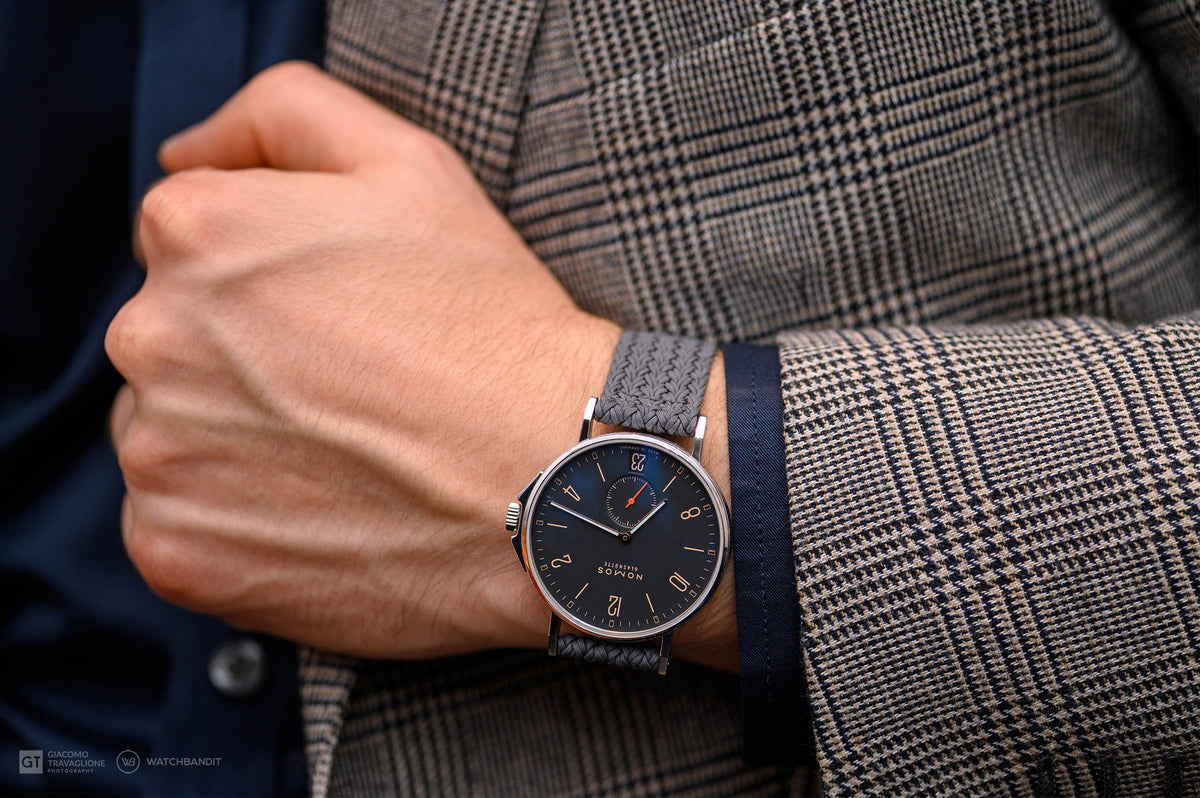
Why should you wear your watch on the left wrist? Here’s the answer!
You’re probably familiar to the fact that the left wrist is the called and considered the ”officially correct” wrist to wear a watch on for men. The debate of which wrist you should wear your watch on has been ever present, especially in the last couple of years as social media has evolved, and more people are sharing photos of them wearing their watch – sometimes on what some people mean is the ”wrong” wrist. But why is it that the ”right” wrist to wear your wrist on as a man is on right wrist? And can’t you wear your watch on whichever wrist you prefer? In this article, we’re looking at the reason why the left wrist today is considered to be the ”right” wrist to wear a watch on, and the reasons for wearing your wristwatch on the left wrist.
Wearing the watch on the right wrist
Most people wear their wristwatch on their non-dominant hand. As such, this means that many left-handed individuals tend to wear their watch on the right hand. As such, this is also the reason why watch brands such as Tudor have developed ”left-hand models”, with the crown and crown guards on the left side of the watch case as opposed to the right, making it more comfortable for left-handed people to wear the watches. Since most people are right-handed, it means that most people also wear their wristwatch on the left wrist, but this isn’t always the case. In fact, there are plenty of people who are right-handed who wear their watch on the right wrist, just like there are left-handed people who wear their wristwatch on their left wrist. Now, no matter if you would argue about the practical benefits of wearing a watch on your left wrist, due to the fact that the majority of the population is right-handed, it’s easy to understand that this is what then becomes the norm. What the majority of people do is eventually what becomes the norm, and since the majority of people wear their watch on their non-dominant hand, this is what becomes the norm, and classified as ”the right way to wear a watch”. Since left-handed people have always been a ”minority” in the society, the rule of wearing your watch on the left hand has been ”invented” by a right-handed individual. But the most important part about the ”norm” for wearing your wristwatch on your left wrist is not about something that someone just one day said that this is how it should be. In fact, there are real, actual benefits to wearing your watch on the left hand.

The Fact
Most people traditionally wear a watch on the non-dominant wrist. For right-handed people, this is usually the left wrist. Left-handed people may prefer the right wrist. There is no strict rule.
Practical advantages
Wearing your watch on the right hand has a few practical advantages. Of course, these practical advantages are only true when you’re right-handed. Now, note that the practical reasons for wearing your watch on the left hand that I’ll go into will focus on right-handed people, as this is what has created the ”rule” of wearing your watch on the left hand. As such, technically, despite the fact that wearing your watch on the left hand is the norm, in order to benefit from these ”advantages”, as a left-handed person, you need to, in theory, wear your watch on your right wrist.
You’re more active with your dominant hand
This is the key reason why left-hand watch-wearing is the norm. Since you tend to use your dominant hand more and are more active with it, it’s easier to accidentally scratch or break your watch when wearing it on your right hand. Additionally, if you are right-handed and wear your watch on your right hand, your watch may get in the way, as well as making it harder to twist your wrist. As such, your watch sit uncomfortably as you’re performing tasks using your right hand. For example, if you have a watch, especially a large one on your right wrist and are trying to write by hand using your right wrist, it becomes quite uncomfortable and harder to write.

Bruno Söhnle Glashütte - Hamburg Automatik Small worn on the left wrist.
It’s easier to set the time
The vast majority of watches have their crown on the right side of the watch case. If you are wearing your watch on the left hand, the crown becomes easily accessible, making it easy to change the time. If you, on the other hand, wear your watch on the right hand, it becomes essentially impossible to change the time with your watch on your arm. This means that you have to remove the watch in order to set the time.
It’s easier to see the time
If you’re right handed, you do more work with your right hand. This means that when your right hand is occupied, it will be easier to quickly check the time without interfering with what it is you’re doing.

Squale – Matic – Light Blue – 60 ATM paired with a Tropical Style Rubber Watch Strap – Grey | WB Original on the left wrist
It’s better for the movement of the watch
Since you’re more active with your right hand as a right-handed person, you will inevitably do more wearing on the watch’s movement as you’re performing tasks. All kinds of shocks, in particular, tend to wear the movement, especially hard shocks which can damage the movement or destroy it completely. For example, if you’re using a hammer and are wearing your watch on the right wrist, you’ll cause major shocks to the movement of the watch, causing it to wear out faster. The same goes for when you’re performing tasks such as playing tennis (yes you use both hands, but mainly your dominant hand) or when you throw something etc.

Formex Essence Chronometer COSC certified Sellita SW200 movement and patented case-suspension system
You protect your watch from damages
I’ve already mentioned briefly about how you perform most tasks with the right hand, and the thing is that the world is designed for right-handed people, and this is why it, despite being left-handed, might make sense to use the watch on the left hand. For example, door handles, scissors, computer mouse, watches, and so on, are all designed for right-handed individuals, and this means that in many cases, as a left-handed person, you may still use your right arm a lot when performing various tasks throughout the day, and can thus suffer scratches, especially on the case and metallic bracelet. Using a Nylon strap prevents your watch from falling off your wrist, in case a spring bar breaks. Because of its double layered strap, where the watch is fitted in between, the watch will always being held by at least one spring bar. If you want to know more about nylon straps make sure to check out our blog post All you need to know about Nylon (pull-through) Straps
Which Wrist Should a Man Wear a Watch On?
Men traditionally prefer to wear their watches onto the non-dominant arm. Right-handed guys default to the left wrist, while left-handed guys usually pick the right.
This setup is ideally pure ergonomics - not fashion law. Wearing a watch on your non-dominant hand keeps the case, crystal, and buckle out of the way when you write, type, or work with tools. That said, comfort beats tradition. If you prefer your watch to your dominant hand, wear it there.
Why Are Watches Traditionally Worn on the Left Wrist?
The left-wrist standard comes down to 20th-century practicality and World War I military needs. When soldiers shifted from traditional pocket watches to wristwatches in the trenches - they strapped timepieces to their non-dominant arms. It helped in keeping their main hand free for gear and weapons.
Wearing the watch on the left hand - also protected fragile glass crystals from heavy manual labor. Plus, watchmakers placed the winding crown at 3 o'clock so right-handed wearers could adjust the time or wind the mainspring without taking the watch off. Modern sapphire crystals and automatic movements mean watches are much tougher today, but the left-wrist habit stuck around.
Left Wrist vs Right Wrist: Which Should You Choose?
Left Wrist
- Traditional Choice: The universal standard for almost all factory watches.
- Right-Handed Standard: Keeps the watch safe from desk scratches for righties.
- Convenient Crown Operation: Puts the 3 o'clock crown in position for your right hand.
- Familiar Positioning: Matches standard bracelet sizing straight out of the box.
Right Wrist
- Left-Handed Alternative: Keeps the watch clear of paper and desks while writing.
- Personal Preference: Favored by anyone wanting a different fit.
- Enhanced Comfort: Stops a digging crown from pressing into your hand.
- Destro Compatibility: Perfect for left-handed watches with crowns at 9 o'clock.
What Wrist Should a Left-Handed Person Wear a Watch On?
Many left-handed people prefer the right wrist. Wearing your watch on your non-dominant arm keeps the case and buckle from catching on desks or paper while you write.
Even so, some lefties still wear watches on the left out of pure habit or easier crown winding. Hand dominance isn't a rulebook—comfort and convenience make the final call.
Does It Matter Which Wrist You Wear a Watch On?
Not at all. Modern watch wear is entirely flexible. Comfort, your dominant hand, daily activities, crown position, personal preference, and your occupation or hobbies all dictate which arm makes sense for you. Wear your watch wherever it avoids interference.
Can You Wear a Watch on Your Dominant Hand?
There is no rule against it. Some people prefer wearing a watch on their dominant hand because of habit, comfort, or easier access. It might pick up a few extra hairline scratches from daily movement, but it works fine if that setup feels best on your wrist.
Conclusion
You don’t need to follow the “stereotype” of wearing your watch on the left wrist – no matter if you’re left or right-handed. The most important part is that you do what feels best for you. Sure, the ”watch norm” says that you should wear your watch on your left hand, but if this just doesn’t work for you, use the other wrist. This is especially true for left-handed people because, in theory, the same rules of practicality as wearing the watch on the left arm for a right-handed people should apply to a left-handed people wearing the watch on the right wrist. Yes, left wrist is most common but that doesn’t mean it is the best alternative for you. RZE – Fortitude GMT – Nighthawk on the left wrist
Discover now the WB Original Watch Strap-
and Microbrand Watch Collection!
About the author
Jens Wirdenius is the editor-in-chief of marketing blog Veloce International and the influencer directory Veloce Network. He is a social media and marketing nut, sharing his passion for business and digital marketing in his articles.
Frequently Asked Questions About Which Wrist to Wear a Watch On
Which wrist does a man wear a watch on?
What hand should a man wear a watch on?
What arm do you wear your watch on?
Which wrist should a left-handed person wear a watch on?
Is it better to wear a watch on the left or right wrist?
Can you wear a watch on your dominant hand?
Why are watches usually worn on the left wrist?


Leave a comment
This site is protected by hCaptcha and the hCaptcha Privacy Policy and Terms of Service apply.